560+ Studies. One Conclusion. What the New Research Says About Root Canal Teeth and Your Health.
In April 2026, the most comprehensive scientific review of root canal safety ever conducted was published. It drew on more than 560 studies. I want you to understand what it actually found — and what it means if you already have a root canal tooth.

If you clicked on an ad that said “560+ Studies. One Conclusion.” — I want to make sure this page delivers on that promise.
In April 2026, the International Academy of Oral Medicine and Toxicology (IAOMT) released what they call their most comprehensive review of root canal science ever compiled. It draws on more than 560 scientific references. And its conclusion is something that most patients — and honestly, many dentists — have never heard clearly stated before.
I’m going to walk you through what the research actually found. Not to alarm you. But because you deserve to have this information, and because knowing it puts you in a position to make decisions about your own health that most people simply can’t make right now.
Let’s go through it together.
1. How Science Defines “Success” for a Root Canal — and Why That Definition May Be Incomplete
When your dentist tells you a root canal was “successful,” they’re typically measuring one thing: did the pain go away and is the tooth still in your mouth?
That’s the standard dental definition of success — pain relief and tooth retention.
The IAOMT’s 2026 review raises a direct challenge to that definition. After reviewing 560+ studies, the organization concluded:
“Current definitions of ‘success’ in dentistry often focus on pain relief or tooth retention, rather than whether infection persists or overall health effects.”
In other words, a root canal can be declared successful by conventional standards while still leaving infection behind — infection that may not cause tooth pain, but that research increasingly links to effects elsewhere in the body.
That’s not a fringe opinion. That’s what 560+ scientific studies led a major international dental organization to conclude.
And that reframing — from “does it hurt?” to “is it healthy?” — is what makes this research significant.
2. Why a Root Canal Tooth Can Never Be Fully Sterilized
To understand why infection persists, you need to understand a little bit about what a tooth actually looks like on the inside — because it’s nothing like most people imagine.
Most people picture a tooth like a simple tube: one main canal, cleaned out, filled in, done. But the inside of a tooth is far more complex than that.
Think of the tooth as a highway system. The main canal your dentist treats is like the interstate — but branching off that interstate are thousands of smaller roads called dentinal tubules. These microscopic channels run through the entire tooth. If you could lay them end to end in a single front tooth, they would stretch for more than three miles.
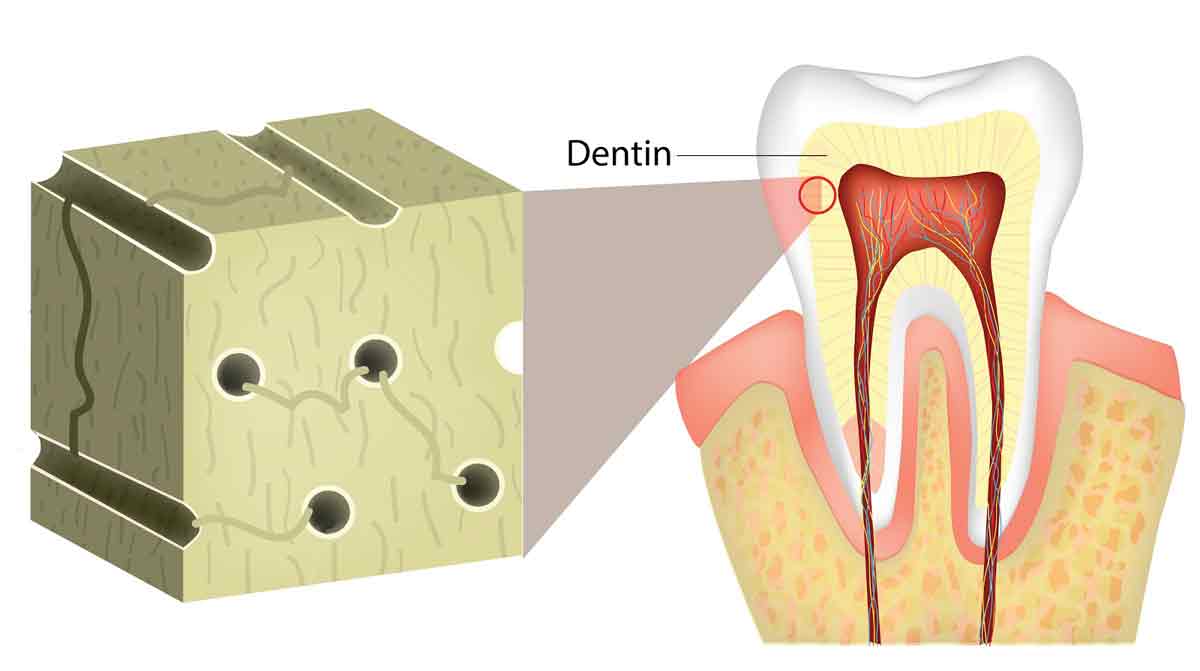
Bacteria travel through those tubules. The medications used to sterilize a tooth during a root canal are very effective at cleaning the main canal — but the tubules are another story entirely.
There are simply too many of them, and they’re too small for any cleaning instrument or sterilizing chemical to reach.
Back in the early 1900s, Dr. Weston A. Price conducted what remains one of the most exhaustive early studies on this question. He sterilized 1,000 extracted root canal teeth using 40 different chemicals — treatments far harsher than anything you could safely use in a living patient. Then he cultured each tooth for bacteria.
Of the 1,000 sterilized root canal teeth cultured by Dr. Price, 990 still tested positive for toxic bacteria — even after treatment with 40 different sterilizing chemicals.
Modern DNA testing has confirmed and extended this finding. Researchers have identified 83 known anaerobic bacterial species that can survive in root canal-treated teeth. Studies have found 53 of those 83 species present in extracted root canal samples.
The reason is straightforward: once the blood supply and nerve tissue are removed from the tooth during a root canal, the immune system loses its pathway into the tooth. The bacteria that remain in the tubules adapt to living without oxygen. And once they do, they can no longer be reached by antibiotics, immune cells, or any dental treatment.
The tooth becomes, in effect, a sealed chamber where bacteria can survive and produce toxic waste products indefinitely.
3. The Silent Infection Problem — Why Most People Have No Idea
Here’s the part that surprises most patients.
The infection I’m describing — called chronic apical periodontitis, or CAP — usually produces no symptoms at all. No pain. No swelling. No obvious warning signs.
Approximately half of all root canal-treated teeth develop chronic apical periodontitis — a persistent infection at the tip of the root. The vast majority of these cases are completely asymptomatic.
That means roughly half of people who have had a root canal may be carrying a hidden infection they don’t know about — because their tooth doesn’t hurt, and their dentist hasn’t looked for it using the right tools.
This is where imaging matters. Standard dental X-rays — the flat, two-dimensional images taken at most dental offices — frequently miss apical periodontitis entirely. The infection can be present, active, and significant without showing up on a conventional X-ray.
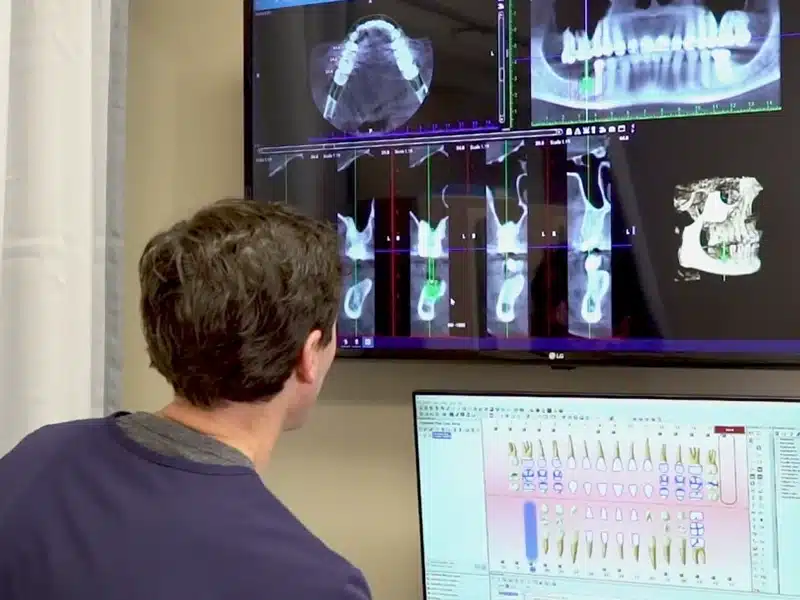
3D cone beam CT imaging (CBCT), which we use at Total Care Dental, provides a three-dimensional view of the tooth and surrounding bone structure. It shows what a standard X-ray cannot.
This is exactly why a thorough evaluation matters. If you’ve had a root canal and you’re wondering whether it may be affecting your health, a standard dental X-ray isn’t enough to answer that question. You need 3D imaging.
4. What the Research Found About Root Canal Teeth and Your Heart
Of all the systemic associations documented in the IAOMT’s 2026 review, the cardiovascular connection is the most extensively studied.
Here is what the research has found:
A hospital records study found that patients with apical periodontitis — the chronic infection found in root canal-treated teeth — are 5.3 times more likely to have cardiovascular disease than patients without it.
An G.K. et al., 2016This Swedish cardiovascular research project, involving 805 heart attack patients and 805 healthy controls, found that having one or more root-filled teeth was associated with increased risk of future cardiovascular events or death.
Journal of Endodontics, 2024The proposed mechanism is this: every time a person with an infected root canal tooth bites down, bacteria are flushed from the tooth into the surrounding bloodstream. Those bacteria trigger inflammation throughout the body. Over time, they may seed the walls of blood vessels, contributing to the buildup of arterial plaques — the same plaques involved in heart attacks and strokes.
Specific inflammatory markers elevated by apical periodontitis — including hs-CRP, IL-6, and TNF-alpha — are all established cardiovascular risk factors. These are markers that cardiologists use to screen for heart disease risk. And they appear to be elevated in patients with root canal-related infection.
I want to be careful here about how I say this. Researchers have found associations between root canal treated teeth and cardiovascular disease — not proof that one causes the other. What that means is: for some patients, their oral health and their heart health may be connected in ways that conventional medicine hasn’t fully explored yet.
That’s worth knowing. And it’s worth looking into.
Root Canals Lead to Infection — Here’s What I’d Do If I Already Had One · 494K views
5. Other Systemic Connections Documented in the Research
The cardiovascular connection is the most studied — but the IAOMT’s 2026 review documented associations across a wide range of conditions. These are all presented as observed associations in research, not proven cause-and-effect. But the consistency of the findings across multiple conditions points to something worth taking seriously.
Diabetes
Patients with diabetes show higher rates of apical periodontitis, larger infections, and greater difficulty controlling blood sugar. Researchers have found a bidirectional relationship — each condition may worsen the other.
Pregnancy Complications
Maternal apical periodontitis has been identified as a strong independent predictor of preeclampsia — the leading cause of maternal mortality — and has been associated with preterm birth and intrauterine growth restriction.
Autoimmune Conditions
Higher rates of apical periodontitis have been found in patients with rheumatoid arthritis, IBD, ulcerative colitis, Crohn’s disease, and psoriasis. These conditions share common inflammatory pathways with root canal-related infections.
Liver Disease
In one study of patients undergoing liver transplant assessment, 79% had one or more teeth with apical periodontitis — significantly higher than healthy controls.
Fifteen million root canals are performed every year in the United States alone. If roughly half of those teeth go on to develop chronic apical periodontitis — a silent, asymptomatic infection — that means millions of Americans may be carrying a hidden infection they’re unaware of, and that research increasingly suggests may be affecting their health in ways no one has connected.
This isn’t about alarm. It’s about information. And it’s about having access to the right diagnostic tools to find out whether this applies to you.
6. What This Means If You Already Have a Root Canal Tooth
I want to be very direct with you here, because this is where a lot of people get confused — or scared — and neither of those helps you.
Having a root canal does not automatically mean something is wrong. Some people have root canal-treated teeth that show no signs of infection and appear healthy on advanced imaging. If that’s you, you may be just fine.
But if you’re someone who has had unexplained health symptoms — chronic fatigue, joint pain, recurring illness, immune issues, conditions that haven’t responded well to treatment — and you also have one or more root canal-treated teeth, it is worth finding out whether those teeth are harboring infection.
Here’s what I’d encourage you to think about:
- When was the last time your root canal-treated teeth were evaluated on 3D imaging, not just a standard X-ray?
- Were you ever told about the 50% chronic infection rate before you had the procedure?
- Have you experienced unexplained health symptoms since your root canal was performed?
These aren’t rhetorical questions. They’re the questions I ask patients who come to Total Care Dental after years of searching for answers. And very often, the answers are revealing.
The most important thing I want you to know: getting evaluated is not the same as committing to any procedure. A comprehensive evaluation simply tells you what’s there. What you do with that information is entirely your decision — and we’ll support whatever direction you choose.
Patients Who Came Looking for Answers
“I suffered from severe eczema for 8 years and tried everything to treat it. Finally, I heard that root canal teeth can get infected and cause systemic inflammation. I had 2 root canals in my mouth — so I got them checked at Total Care Dental by Dr. Jorgensen with the 3D X-ray (2D X-rays can’t find some infections) and they were both infected. I had surgery to remove the infected teeth and place implants. My severe eczema is about 90–95% gone, which has given me my life back. If you have unexplained chronic health problems you may want to look into possible root canal infection.”
“I think they finally found out why I get chronic sinus infections on one side of my face. The CT scan showed that two old root canals were causing problems. Dr. Mishler pulled my root canal tooth and I’m just so happy with the results and how they answered my many, many questions. Thank you for getting me even closer to fixing autoimmune issues!”
“I have had tooth and nerve pain for years in a tooth that wasn’t supposed to have feeling since it was a root canal. I finally found a place that found the cause of the pain. I definitely recommend coming to Total Care Dental if you can’t get answers anywhere else. They were thorough and professional.”
What We Do Differently at Total Care Dental
Most dental offices evaluate root canal teeth the same way they did 30 years ago: a standard 2D X-ray, a quick visual check, and if there’s no pain, they move on.
We don’t think that’s enough. And the research agrees.
3D Cone Beam CT Imaging
We use advanced CBCT technology that shows a three-dimensional view of your teeth, bone, and surrounding structures. This imaging finds what standard X-rays routinely miss — including silent infections at the root tip.
Biological Dentistry Approach
We look at the mouth as part of the body, not separate from it. Your dental health and your overall health are connected — and our evaluation reflects that perspective.
IAOMT-Aligned Protocols
Our approach aligns with the International Academy of Oral Medicine and Toxicology — the same organization that published the 560+ study review. We take this research seriously, and our clinical protocols reflect it.
Evaluation First. No Pressure.
Our goal at your first visit is information — not a procedure. We’ll tell you exactly what we find, explain your options clearly, and support whatever decision you make. You’re in charge.
Find Out What the Research Means for Your Tooth
The first step is a comprehensive new patient exam. During your visit, you’ll receive a low-dose 3D cone beam CT scan, a full oral evaluation, and a clear report of findings — so you know exactly what’s there and what your options are.
- 3D cone beam CT scan (sees what standard X-rays miss)
- Comprehensive evaluation of root canal-treated teeth
- Whole-body health perspective — not just the tooth
- Clear findings and options explained in plain language
- No pressure, no sales pitch — just information
Or call our office: (801) 756-3737